vef1-2024
Vefforritun 1 kennd haustið 2024
Fyrirlestur – HTTP og form
Vefforritun 1 — TÖL107G
Ólafur Sverrir Kjartansson, osk@hi.is
Villumeðhöndlun
- JavaScript hefur ekki eins villumeðhöndlun og HTML og CSS
- Ef eitthvað brotnar eru líkur á að það hafi áhrif á allt
- Verðum að hafa í huga
Has the page loaded yet? Did the HTTP request for the JavaScript succeed? Did the HTTP request for the JavaScript complete? Does the corporate firewall block JavaScript? Does their ISP or mobile operator interfere with downloaded JavaScript? Have they switched off JavaScript? Do they have add‐ons or plug‐ins installed which inject script or alter the DOM in ways you didn’t anticipate? Is the Content Delivery Network up?
Unobtrusive JavaScript
Alveg eins og við aðskiljum útlit frá efni viljum við aðskilja forrit frá efni.
Tengt progressive enhancement er hugtakið unobtrusive JavaScript.
- Aðskilnaður hegðunar frá markupi
- Sem minnst fótspor — ekki skilgreina í global scope
- Athuga hvort virkni sé studd og þá bæta henni við
- Bæta hegðun við og virka án hennar – ekki festa atburð við element
<a href="..." class="enhance"onclick=”handleClick()">document.querySelector('enhance'). addEventListener('click', handleClick)
1. Identify core functionality.
2. Make that functionality available using the simplest possible technology.
3. Enhance!
Some designers have misunderstood progressive enhancement to mean that all functionality must be provided to everyone. It’s the opposite. Progressive enhancement means providing core functionality to everyone. After that, it’s every browser for itself.
Verkefni
- Í verkefnum sem við leysum með JavaScript erum við stundum að setja upp efni eftir að vefur hleðst inn
- Ef svona verkefni væru leyst í raunveruleikanum myndum við hafa server-side rendering
- Höfum efni til staðar í HTML í byrjun—krefjumst ekki JavaScript
- Viðfangsefni í vefforritun 2
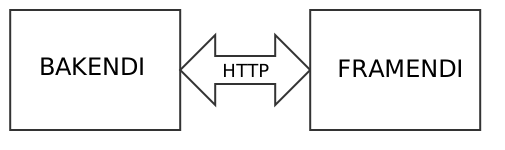
Framendi VS bakendi
Sagan
- Búið til af Tim Berners-Lee í sambandi við HTML
- Fyrst skjalað sem útgáfa 0.9 1991
- RFC 1945 skilgreinir HTTP 1.0 árið 1996
- RFC 2616 skilgreinir HTTP 1.1 árið 1999
- HTTP 1.1 ennþá mikið notað í dag
- HTTP 2 þó að sækja í sig veðrið, er um 49% af traffík í okt 2020!
- Notar TCP/IP fyrir gagnafluttning
- DNS (Domain Name System) þýðir IP-tölur í lén
Request—response
- HTTP byggir á request—response milli client og server
- Client sendir request á server
- Server framkvæmir aðgerðir og sendir response á client
Server
- Server getur einfaldlega sent til baka HTML, CSS og JavaScript skrár sem finnast, t.d. eins og á heimasvæði HÍ
- Eða framkvæmt flóknari aðgerðir, sótt gögn í gagnagrunn, sett saman vef með forriti
- t.d. haus, efni og fótur síðu dýnamískt búið til
Request
- Request er:
- Request line: aðferð (method) sem notuð er, auðlind og útgáfu af HTTP
- Headers fyrir aðgerð, a.m.k.
Host - Tóm lína
- Hugsanlega gögn
Request – dæmi
GET / HTTP/1.1
Host: example.org
User-Agent: Mozilla/5.0 (Macintosh; Intel Mac OS X 10.15; rv:93.0) Gecko/20100101 Firefox/93.0
Accept: text/html,application/xhtml+xml,application/xml;q=0.9,image/avif,image/webp,*/*;q=0.8
Accept-Language: en-US,en;q=0.5
Accept-Encoding: gzip, deflate
Connection: keep-alive
Response
- Response er:
- Status lína: útgáfa af HTTP, staða sem tala og staða sem texti
- Headers frá þjóni
- Tóm lína
- Hugsanlega gögn
Response – dæmi
HTTP/1.1 200 OK
Content-Encoding: gzip
Accept-Ranges: bytes
Cache-Control: max-age=604800
Content-Type: text/html; charset=UTF-8
Date: Mon, 25 Oct 2021 08:39:07 GMT
Expires: Mon, 01 Nov 2021 08:39:07 GMT
Last-Modified: Thu, 17 Oct 2019 07:18:26 GMT
Vary: Accept-Encoding
Content-Length: 648

<html>
...
HTTP aðferðir
- HTTP Request þarf að hafa aðferð (method) tilgreinda
- Stundum kölluð sögn
- HTTP 1.0 og 1.1 skilgreina þær flestar sem notaðar eru í dag
GET– biður um síðu, lang mest notaða aðferðin!POST– Biður server um að taka við gögnum í request sem nýrri einingu. T.d. nýtt svar við umræðuþræði eða ný gögn í gagnagrunniPUT,DELETEo.fl. notað í vefþjónustum, ekki á vefnum
Hausar – headers
- Sendir bæði í request og response
- Heiti og gildi í texta, aðskilið með tvípunkt
Connection: close
Dæmi um request hausa
Accept– efnistýpur, content-types, sem eru samþykktar fyrir svarAccept-Charset– Charset sem eru samþykkt í svariHost– domain nafn sem beðið er um
Dæmi um response hausa
Date– Dagstími sem svar var sentServer– Nafn þjónsContent-Length– lengd svars í bætumContent-Type– MIME týpa efnis og stafasett
Stateless
- HTTP er hannað sem stöðulaus prótókoll
- Server þarf ekki að geyma neinar upplýsingar á milli beiðna
- Stöður geta þó verið geymdar á nokkra máta, förum ekki nánar í það
Stöðukóðar — status codes
Þegar þjónn svarar með response gefur hann upp stöðukóða, sem tölu og lesanlegan texta
1xx– Til upplýsinga2xx– Gekk, success3xx– Áframsending, redirection4xx– Villa hjá client5xx– Villa hjá server
Dæmi um stöðukóða
200 OK– staðlað svar fyrir HTTP request sem gengur upp201 Created– request gekk upp og ný auðlind var búin til301 Moved Permanently– þessi og allar frekari requests eiga að fara á nýtt URI
400 Bad Request– Einhver villa í syntax hjá client404 Not Found– Fannst ekki en gæti birst í framtíðinni500 Internal Server Error– Almenn villa
URL
- Staðsetja og skilgreina hvernig við sækjum vefsíður yfir HTTP
- Samanstanda af nokkrum pörtum
http://example.org/example.html?start=true#kafli2- Stundum er talað um
URI, en í nýjum staðli erURLogURIþað sama
HTTP aðferðir og <form>
- Þegar við búum til
<form>getum við skilgreint hvort við notumGETeðaPOSTmeðmethodattribute <form method="get">sendir gögn meðGETog setur allar breytur í query-string, t.d.http://example.org/?foo=bar<form method="post">sendir gögn meðPOSTog setur allar breytur í request body
<form method="get">
<form method="get" action="">
  <label>
    Nafn: <input type="text" name="name">
  </label>
  <button>Senda</button>
</form>
<form method="post">
<form method="post" action="">
  <label>
    Name: <input type="text" name="name">
  </label>
  <button>Senda</button>
</form>